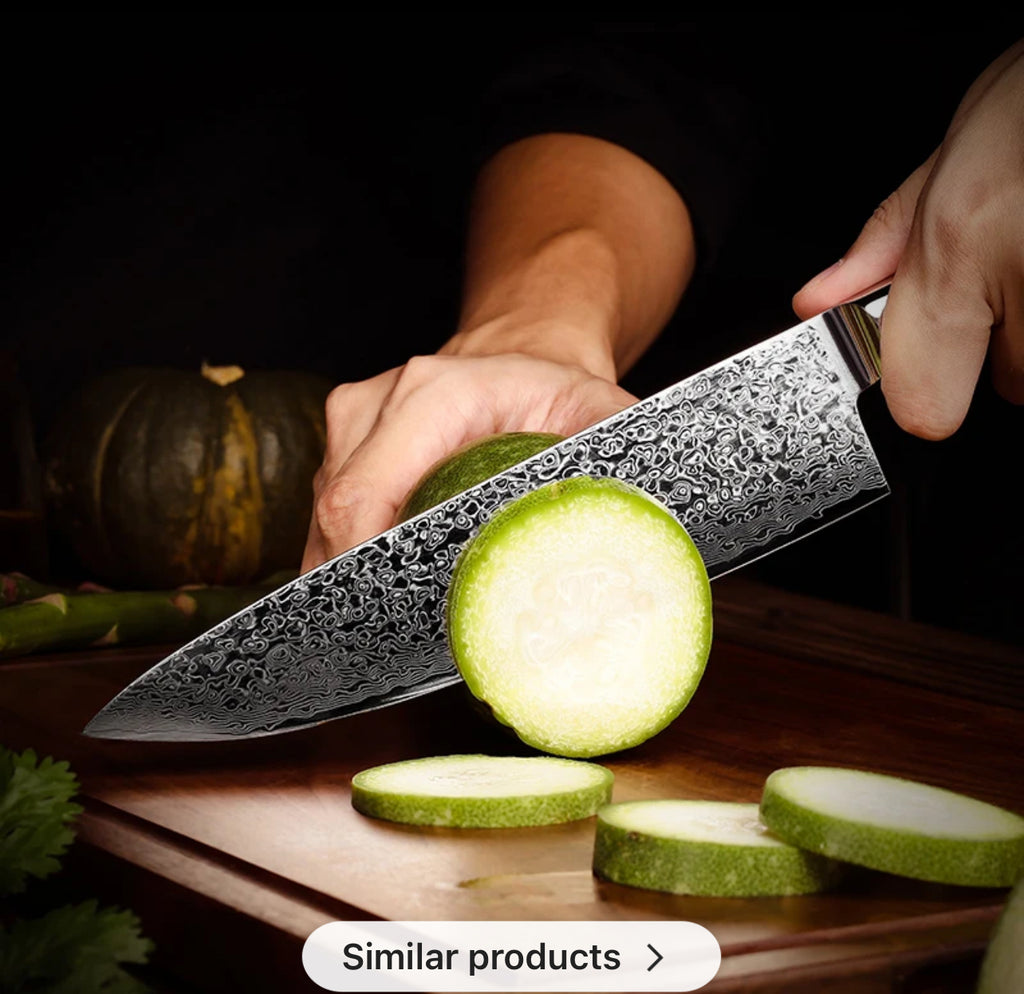
Choosing the right Damascus chef knife can feel overwhelming with hundreds of options available online. From VG-10 cores to pakka wood handles, 67-layer patterns to full tang construction, the terminology alone can confuse even experienced cooks. This comprehensive buyer's guide cuts through the confusion and helps you select the perfect Damascus chef knife for your needs and budget.
Understanding Damascus Chef Knives: What Makes Them Special?
A Damascus chef knife represents the pinnacle of culinary craftsmanship, combining ancient forging techniques with modern metallurgy. Unlike mass-produced stainless steel knives, each Damascus blade features multiple layers of steel forge-welded together, creating both functional benefits and stunning visual patterns.
The typical Damascus chef knife contains 67 to 200+ layers of alternating high-carbon and low-carbon steel. This layering process, called pattern welding, creates a blade that's simultaneously hard enough to hold a razor-sharp edge and flexible enough to resist chipping or breaking.
Why Professional Chefs Choose Damascus
Professional kitchens worldwide have embraced Damascus chef knives for several compelling reasons:
Superior Edge Retention - Damascus blades stay sharp 3-5 times longer than standard stainless steel knives, reducing the frequency of sharpening and maintaining consistent cutting performance throughout busy service.
Exceptional Balance - The layered construction and full tang design create perfect weight distribution, reducing hand fatigue during extended prep work.
Precision Cutting - The micro-serrations created by the layering process allow for incredibly clean cuts through delicate ingredients like tomatoes, fish, and herbs without tearing or crushing.
Durability - Quality Damascus knives can last 20-30 years or more with proper care, making them a genuine lifetime investment rather than a disposable kitchen tool.
Blade Size: Finding Your Perfect Length
The blade length of your Damascus chef knife significantly impacts its versatility and comfort. Here's how to choose:
8-Inch Chef Knife (Most Popular)
The 8-inch Damascus chef knife represents the sweet spot for most home cooks and professional chefs. This length provides:
-
Versatility
- Handles everything from mincing garlic to breaking down whole chickens
-
Control
- Manageable size for precise cuts without being unwieldy
-
Rocking Motion
- Perfect length for the classic rocking chop technique
-
Storage
- Fits comfortably in standard knife blocks and drawers
Best for: General home cooking, professional prep work, cooks with average hand size
10-Inch Chef Knife (Professional Choice)
Larger Damascus chef knives excel in professional kitchens and for cooks who regularly prepare large quantities:
-
Efficiency
- Longer blade covers more cutting surface with each stroke
-
Large Ingredients
- Easily handles whole cabbages, melons, and large cuts of meat
-
Professional Speed
- Reduces prep time in high-volume cooking environments
Best for: Professional chefs, serious home cooks, those with larger hands, high-volume meal prep
6-7 Inch Chef Knife (Compact Option)
Smaller Damascus chef knives work well for specific situations:
-
Small Kitchens
- Easier to maneuver in tight spaces
-
Detailed Work
- Better control for intricate cutting tasks
-
Smaller Hands
- More comfortable for cooks with petite hands
-
Travel
- Easier to pack for cooking classes or vacation rentals
Best for: Apartment dwellers, cooks with smaller hands, detailed prep work, secondary knife
Steel Types: Decoding Damascus Cores
The core steel determines your knife's performance characteristics. Here are the most common types:
VG-10 Damascus Steel (Premium Choice)
VG-10 represents the gold standard in Damascus chef knives, featuring a VG-10 stainless steel core wrapped in Damascus layers.
Characteristics:
- Hardness: 60-62 HRC
- Excellent edge retention
- Superior corrosion resistance
- Easier to sharpen than harder steels
- Professional-grade performance
Price Range: €150-400 for quality VG-10 Damascus chef knives
Best for: Serious home cooks, professional chefs, those wanting the best balance of performance and maintenance
AUS-10 Damascus Steel (Mid-Range)
AUS-10 offers excellent performance at a more accessible price point:
Characteristics:
- Hardness: 58-60 HRC
- Good edge retention
- Excellent corrosion resistance
- Easy to sharpen
- Great value for money
Price Range: €80-200 for quality AUS-10 Damascus chef knives
Best for: Home cooks upgrading from basic knives, budget-conscious buyers wanting Damascus quality
High Carbon Damascus Steel (Traditional)
Traditional high-carbon Damascus delivers exceptional sharpness with more maintenance requirements:
Characteristics:
- Hardness: 60-62 HRC
- Exceptional sharpness potential
- Requires more care (prone to rust)
- Develops patina over time
- Traditional aesthetic
Price Range: €100-300
Best for: Knife enthusiasts, those who enjoy knife maintenance, collectors
ZDP189 Damascus Steel (Ultra-Premium)
ZDP189 represents the absolute pinnacle of knife steel technology:
Characteristics:
- Hardness: 64-66 HRC
- Exceptional edge retention (stays sharp longest)
- Requires professional sharpening
- Most expensive option
- Professional chef's choice
Price Range: €400-800+
Best for: Professional chefs, serious collectors, those wanting the absolute best performance
Handle Materials: Comfort and Durability
The handle material affects comfort, durability, and aesthetics. Here's what to consider:
Pakka Wood Handles (Professional Standard)
Pakka wood (compressed and resin-treated wood) represents the professional choice:
Advantages:
- Water-resistant and durable
- Comfortable grip
- Professional appearance
- Resistant to cracking and warping
- Easy to maintain
Disadvantages:
- Can be slippery when wet
- May darken over time
Best for: Professional use, daily cooking, those wanting traditional aesthetics
Olive Wood Handles (Premium Natural)
Olive wood offers beautiful natural grain patterns:
Advantages:
- Stunning unique grain patterns
- Naturally antimicrobial
- Warm, comfortable feel
- Ages beautifully
- Eco-friendly
Disadvantages:
- Requires occasional oiling
- More expensive
- Each handle looks different
Best for: Gift purchases, collectors, those valuing natural materials
Stabilized Wood Handles (Enhanced Durability)
Stabilized wood undergoes a process that enhances its properties:
Advantages:
- Extremely water-resistant
- Won't crack or warp
- Beautiful patterns
- Very durable
- Low maintenance
Disadvantages:
- Higher cost
- Less traditional feel
Best for: Professional kitchens, humid climates, low-maintenance preference
Resin and Composite Handles (Modern Choice)
Modern synthetic materials offer unique benefits:
Advantages:
- Completely waterproof
- Available in many colors
- Very durable
- Easy to clean
- Dishwasher safe (though hand washing still recommended)
Disadvantages:
- Less traditional appearance
- Can feel less premium
- May not age as gracefully
Best for: Modern kitchens, those wanting colorful options, maximum durability
Damascus Pattern Layers: Does More Mean Better?
Damascus knives typically feature 67 to 200+ layers. Here's what you need to know:
67-Layer Damascus (Standard Quality)
The most common configuration offers excellent performance:
- Clear, visible patterns
- Good balance of aesthetics and function
- More affordable
- Easier to maintain
Best for: First Damascus knife purchase, practical daily use
100-150 Layer Damascus (Premium)
More layers create more intricate patterns:
- More complex visual patterns
- Slightly better performance
- Higher price point
- Collector appeal
Best for: Gift purchases, collectors, those wanting standout aesthetics
200+ Layer Damascus (Ultra-Premium)
The highest layer counts create stunning patterns:
- Extremely intricate patterns
- Minimal performance difference from 100-layer
- Significantly higher cost
- Collector's item
Best for: Serious collectors, luxury gifts, those prioritizing aesthetics
Important Note: Beyond 67 layers, additional layers primarily affect aesthetics rather than performance. A well-made 67-layer Damascus knife performs just as well as a 200-layer version.
Full Tang vs. Partial Tang: Why It Matters
Full Tang Construction (Recommended)
Full tang means the blade steel extends through the entire handle:
Advantages:
- Superior balance
- Maximum durability
- Better weight distribution
- Professional standard
- Longer lifespan
How to identify: Look for visible steel along the top and bottom of the handle, often with visible rivets
Partial Tang Construction (Budget Option)
Partial tang knives have the blade extending only partway into the handle:
Disadvantages:
- Less durable
- Poorer balance
- Handle can separate from blade
- Not recommended for Damascus knives
Recommendation: Always choose full tang for Damascus chef knives. The investment in Damascus steel deserves proper construction.
Blade Geometry: Understanding the Edge
Western-Style Edge (20-22 Degrees)
Traditional Western chef knives feature a wider edge angle:
- More durable edge
- Easier to maintain
- Better for heavy-duty tasks
- Slightly less sharp
Best for: General cooking, beginners, those who sharpen infrequently
Japanese-Style Edge (15-17 Degrees)
Japanese Damascus knives typically feature sharper edge angles:
- Razor-sharp cutting
- Precision slicing
- Requires more careful use
- Needs more frequent maintenance
Best for: Experienced cooks, precision work, Japanese cuisine
Hybrid Edge (17-20 Degrees)
Many modern Damascus knives split the difference:
- Balance of sharpness and durability
- Versatile performance
- Moderate maintenance
- Good for most cooks
Best for: Most home cooks, versatile cooking styles
Budget Considerations: What to Expect at Each Price Point
Entry-Level Damascus ($50-100)
What you get:
- Basic Damascus patterns
- AUS-8 or similar steel
- Partial tang possible
- Basic handle materials
- Good for trying Damascus
Limitations:
- May not last as long
- Less refined patterns
- Basic performance
Mid-Range Damascus ($100-250)
What you get:
- Quality VG-10 or AUS-10 steel
- Full tang construction
- Good handle materials
- Clear Damascus patterns
- Excellent performance
Sweet spot: Best value for most buyers
Premium Damascus ($250-500)
What you get:
- VG-10 or premium steel
- Exceptional craftsmanship
- Premium handle materials
- Beautiful patterns
- Professional performance
Best for: Serious cooks, professionals, collectors
Ultra-Premium Damascus ($500+)
What you get:
- ZDP189 or custom steel
- Master craftsman work
- Exotic handle materials
- Collector-grade aesthetics
- Lifetime heirloom quality
Best for: Professional chefs, serious collectors, luxury gifts
Red Flags: What to Avoid
When shopping for Damascus chef knives, watch out for:
Fake Damascus Patterns
Some manufacturers etch patterns onto regular steel:
How to identify:
- Patterns look printed rather than forged
- Extremely low prices
- Patterns are perfectly symmetrical
- No visible layers on the spine
Poor Quality Steel
Avoid knives that don't specify steel type:
Warning signs:
- No HRC rating listed
- Vague descriptions like "high carbon steel"
- Suspiciously low prices
- No brand reputation
Partial Tang in Premium Knives
Damascus knives should always be full tang:
Check for:
- Visible steel through handle
- Rivets securing handle scales
- Manufacturer specifications
Unrealistic Claims
Be skeptical of:
- "Never needs sharpening"
- "Cuts through anything"
- "Professional grade" at budget prices
- Exaggerated layer counts (500+)
Making Your Final Decision
Consider these factors in order of importance:
-
Steel Type
- Determines performance and maintenance
-
Full Tang Construction
- Ensures durability
-
Blade Length
- Matches your cooking style
-
Handle Comfort
- Test if possible
-
Budget
- Buy the best you can afford
-
Pattern Aesthetics
- Personal preference
Care and Maintenance: Protecting Your Investment
Once you've chosen your Damascus chef knife:
Daily Care
- Hand wash immediately after use
- Dry thoroughly
- Use wooden or plastic cutting boards
- Store in knife block or on magnetic strip
Regular Maintenance
- Sharpen every 2-3 months with whetstone
- Hone before each use
- Oil blade monthly if high-carbon
- Professional sharpening annually
Long-Term Care
- Never dishwasher
- Avoid acidic foods for extended periods
- Don't cut frozen foods or bones
- Store properly to prevent damage
Conclusion: Your Perfect Damascus Chef Knife Awaits
Choosing the perfect Damascus chef knife comes down to matching the right specifications to your needs and budget. For most home cooks, an 8-inch VG-10 Damascus chef knife with pakka wood handle and full tang construction offers the ideal balance of performance, durability, and value.
Remember that a quality Damascus chef knife is a lifetime investment. Buy the best you can afford, care for it properly, and it will serve you faithfully for decades while bringing beauty and precision to your culinary creations.
Ready to find your perfect Damascus chef knife? Explore our curated collection of authentic Damascus steel chef knives, each carefully selected for quality, performance, and value.